





Description
Recyclable UBC Scrap Aluminum Can and Wire at Best Price
Recyclable UBC Scrap Aluminum Can and Wire at Best Price
| Feature | Unprepared / Baled UBC | Densified (Shredded) UBC |
|---|---|---|
| Form | Whole, loose, or baled cans | Small, dry, uniform chips |
| Contaminants | High (other metals, plastic, glass, liquid) | Very Low (<1-2%) |
| Lacquer/Ink | Present | Mostly removed |
| Density | Low (unless baled) | High |
| Primary Buyer | Scrap Processor / Intermediate | Secondary Aluminum Smelter |
| Value | Lower (cost to process is high) | Premium (ready for the furnace) |
| Typical Packaging | Bales (secured with wire), Gaylords | Bulk Bags (FIBCs)
|
Types & Grades of Aluminum UBC Scrap
The classification of UBC scrap is based on its preparation level, which directly impacts its value and processing cost for the recycler (smelter).
A. By Preparation and Quality Grade:
- Low Grade / Unprepared UBC:
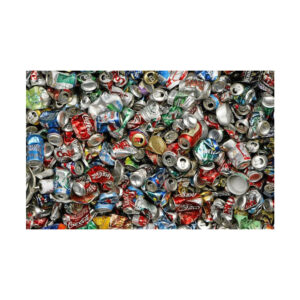
- Description: UBCs as they are typically collected from curbside recycling programs or public bins. This material is contaminated and requires significant processing.
- Key Specs: Contains high levels of Outthrows (materials that are not UBCs, such as steel cans, plastic bottles, glass, paper, and other non-aluminum items). Also includes Prohibited Materials (hazardous substances, moisture, dirt, liquids).
- Typical Outthrow Allowance: Can be as high as 2-10% in initial collection.
- Use: Must be sold to a processor who will clean, shred, and de-lacquer it before it can be sold to a smelter.
- Baled UBC:
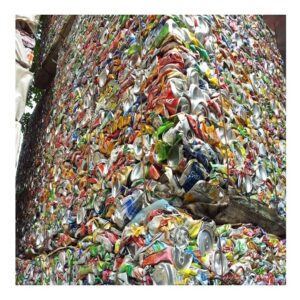
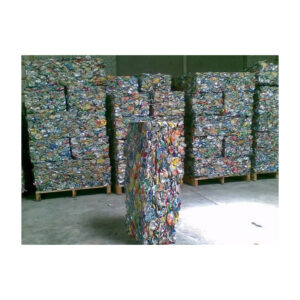
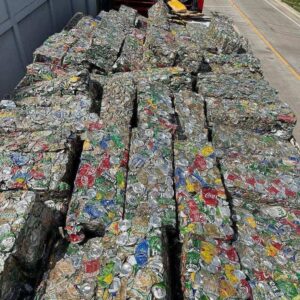
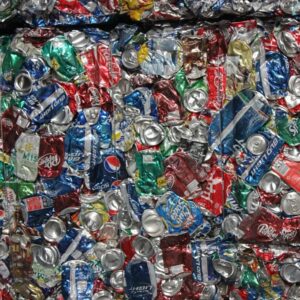
- Description: Unprepared UBCs that have been compressed in a baler for efficient transportation. This is the most common form for transporting collected UBCs to a specialized processor.
- Key Specs: Bales are typically dense, rectangular blocks. While baling reduces volume, it does not improve the inherent quality; the bale can still contain contaminants.
- Use: An intermediate step for logistics. The bales will be shredded and processed to remove contaminants.
- Densified UBC (Shredded and Cleaned):
- Description: This is the premium, prepared form of UBC scrap. The cans have been shredded into small, uniform chips (like confetti) and processed to remove most foreign materials, including the plastic lining (lacquer) and inks.
- Key Specs:
- Alloy: Primarily AA3004 (body) and AA5182 (lid), but processed together.
- Density: High, due to shredding and compression.
- Contaminants: Very low (typically <1-2% non-metallics and other metals).
- Use: This is the form directly consumed by secondary aluminum smelters to produce new aluminum sheet for can stock.
2. Importance & Uses
UBC recycling is a critical component of the modern circular economy, offering profound economic and environmental benefits.
A. Economic Importance:
- High Value: Aluminum is the most valuable material in the waste stream, providing a significant revenue stream for municipalities, recycling centers, and scrap dealers.
- Low Remelting Temperature: Recycling aluminum requires only about 5% of the energy needed to produce primary aluminum from bauxite ore.
- Job Creation: The collection, processing, and remanufacturing of UBCs support a large industry.
B. Environmental Importance:
- Energy and Resource Conservation: Drastically reduces the need for mining bauxite and the energy-intensive electrolysis process, leading to a much lower carbon footprint.
- Waste Reduction: Aluminum cans in landfills can take hundreds of years to decompose. Recycling diverts this waste.
- Closed-Loop Recycling: UBCs are the quintessential example of a closed-loop system. They are recycled back into the same product—new beverage cans—indefinitely without loss of quality.
C. End-Use Applications:
- New Beverage Cans: The primary use. Over 70% of a new can is made from recycled aluminum, most of it from old cans.
- Automotive Parts: Used for engine components, wheels, and trim.
- Building and Construction: For window frames, siding, and gutters.
- Other Consumer Goods: Such as furniture, electronics, and appliances.
Reviews
There are no reviews yet.